
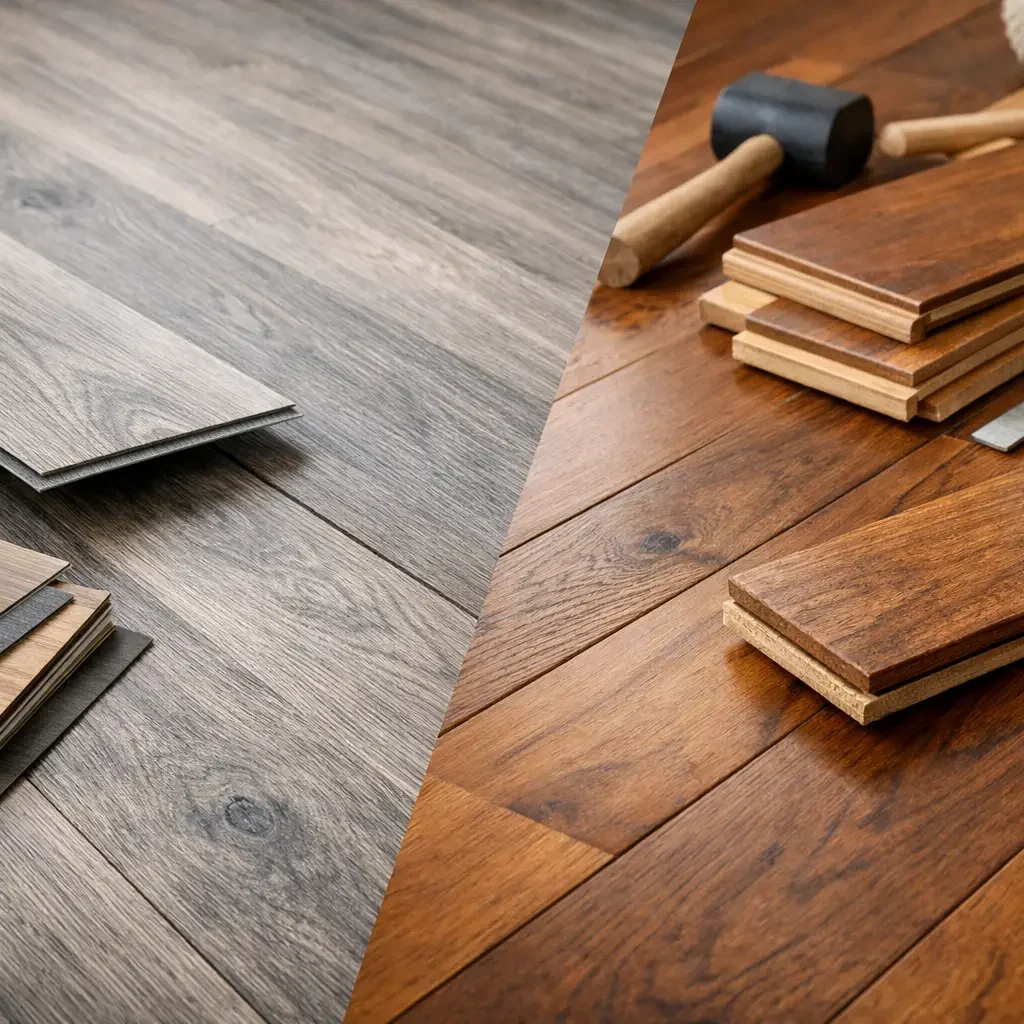
A floor selection can shape far more than the appearance of a room. It affects the construction schedule, the way a home performs under daily use, maintenance responsibilities, and the long-term value of the property. In the decision between vinyl plank versus hardwood flooring, the right answer is rarely based on looks alone. Both can create a refined interior, but they serve different priorities.
For a homeowner planning a renovation, an investor preparing a rental property, or a developer specifying finishes across multiple units, the decision should be made within the broader project plan. Subfloor conditions, moisture exposure, the intended use of each room, installation sequencing, and budget allowances all matter. Choosing the product first and addressing those factors later is a common source of unnecessary change orders.
Vinyl Plank Versus Hardwood Flooring: The Core Difference
Hardwood flooring is a natural wood product, typically installed as solid planks or engineered boards with a real hardwood surface layer. Its character comes from grain variation, color movement, texture, and the way it develops over time. It is a material chosen as much for its permanence as for its appearance.
Luxury vinyl plank, often called LVP, is a manufactured flooring product designed to replicate wood. Quality varies considerably, but higher-grade products can provide convincing visual detail, a textured surface, and strong resistance to everyday wear. Most vinyl plank systems are floating floors, although glue-down installations are also available for commercial and higher-traffic settings.
The distinction is practical as well as visual. Hardwood is a finish that can be renewed, repaired, and refinished under the right conditions. Vinyl plank is built for resilience and convenience, but once its wear layer is compromised, individual boards generally need replacement rather than restoration.
Appearance and Design Intent
Hardwood brings an authenticity that vinyl cannot fully reproduce. Each plank has natural variation, and the material responds to light and age in a way that gives a space depth. In premium residences, custom renovations, and properties where architectural continuity is central to the design, hardwood often supports a stronger overall finish.
That does not mean vinyl plank is a lesser design choice in every project. High-quality vinyl plank can be visually convincing, particularly in larger rooms and from normal viewing distance. It offers a wide range of wood tones, plank widths, and styles without the variation that can make natural wood harder to control. For projects with a specific, consistent palette across many rooms or units, that predictability can be valuable.
Samples should always be reviewed in the actual space. Lighting, wall colors, cabinetry, and transitions to adjacent rooms can change how a floor reads. A product that looks excellent under showroom lighting may appear too cool, too flat, or too busy once installed.
Cost: Look Beyond the Material Price
Vinyl plank usually carries a lower initial material cost than quality hardwood, and installation can be faster. This can make it a practical option where budget discipline is a central requirement or where a large floor area must be completed efficiently.
Hardwood typically requires a greater investment in materials and labor. The final cost can also rise when the project includes leveling work, removal of existing flooring, custom stains, detailed transitions, or a more complex installation pattern. Engineered hardwood may provide a middle ground, offering real wood at a lower cost than some solid hardwood options while improving stability in certain conditions.
The most useful comparison is not simply price per square foot. It is the installed cost over the expected ownership period. A less expensive floor can become costly if it requires frequent replacement in a high-traffic environment. Conversely, paying for hardwood in a space with persistent moisture risk may create a maintenance burden that does not align with the project’s goals.
Moisture, Pets, and Daily Wear
This is where vinyl plank has a clear performance advantage. Many vinyl plank products are waterproof or highly water-resistant, making them well suited to kitchens, laundry rooms, entryways, basements, and homes with active pets or young children. Spills can be addressed without the same concern for staining, swelling, or cupping associated with wood.
Hardwood is more sensitive to moisture and humidity changes. Standing water, leaks, and repeated wet cleaning can damage the boards or affect their finish. Even engineered hardwood, while often more dimensionally stable than solid wood, is not a substitute for a waterproof flooring system.
For main living areas, bedrooms, and formal spaces, hardwood can perform exceptionally well when it is properly specified and maintained. Surface scratches and dents are part of the material’s natural aging process, although they can be minimized with suitable finishes, area rugs, furniture pads, and regular care. Some owners appreciate this evolving patina. Others prefer the lower-maintenance finish of vinyl plank.
Vinyl is resistant to many daily challenges, but it is not indestructible. Heavy furniture, sharp objects, and intense direct sun can leave marks or cause fading depending on product quality and installation conditions. Its performance depends on choosing an appropriate wear layer and preparing the subfloor correctly.
Installation Conditions Matter More Than Most Owners Expect
A flooring product can only perform as well as its installation allows. Vinyl plank may appear simple to install, but an uneven subfloor can lead to joint separation, visible irregularities, or premature wear. Moisture testing and subfloor preparation remain necessary, especially over concrete slabs.
Hardwood installation requires even closer coordination. The wood needs time to acclimate to the site’s temperature and humidity before installation. Moisture levels in the subfloor must be evaluated, and the flooring installation should be sequenced carefully around painting, cabinetry, millwork, and other finish work. Installing hardwood too early can expose it to damage from later trades. Installing it too late can complicate transitions and final detailing.
For both materials, thoughtful planning of floor heights is essential. A renovation may include tile, carpet, stone, or existing finished surfaces that must meet the new flooring cleanly. Thresholds, door clearances, stair nosings, and baseboard details should be reviewed before materials are ordered, not resolved as field adjustments.
Resale Value and Property Positioning
Hardwood is widely recognized as a premium feature and can strengthen buyer perception, especially in higher-end residential markets. It communicates permanence and quality in a way that supports a home’s overall positioning. Where the property is intended for long-term ownership or a premium resale strategy, hardwood can be a sound investment.
Vinyl plank can still be a strategic choice for resale, particularly in entry-level, rental, vacation, and family-oriented properties. Buyers often value attractive flooring that feels current, is easy to clean, and does not require special care. In those settings, a quality vinyl product may deliver a better return than an expensive wood floor that the property type does not fully support.
The key is alignment. Flooring should match the expectations created by the property’s location, price point, architecture, and other finishes. A luxury kitchen paired with low-grade vinyl can feel inconsistent. At the same time, installing delicate hardwood in a high-turnover rental may not be the most responsible use of the budget.
How to Make the Right Selection
Begin with the room, not the product. A moisture-prone lower level, a busy commercial office, and a formal living room should not automatically receive the same flooring specification. Consider how the space will be used, who will maintain it, and how long the owner expects to keep the property.
Next, establish the complete installed budget, including demolition, subfloor correction, moisture mitigation, transitions, trim work, and furniture moving. This gives a more reliable picture than comparing showroom samples by material price alone.
Finally, select based on the intended standard of the finished property. Vinyl plank offers practical durability, cost control, and strong visual flexibility. Hardwood offers natural character, repairability, and lasting design value. Neither is universally better. The better choice is the one that supports the property’s use, financial plan, and expected level of finish without creating avoidable risk later in the project.
A well-managed renovation treats flooring as an integrated decision, coordinated with the design, schedule, site conditions, and long-term ownership plan. That early coordination is what turns a material choice into a finish that performs as intended for years.