
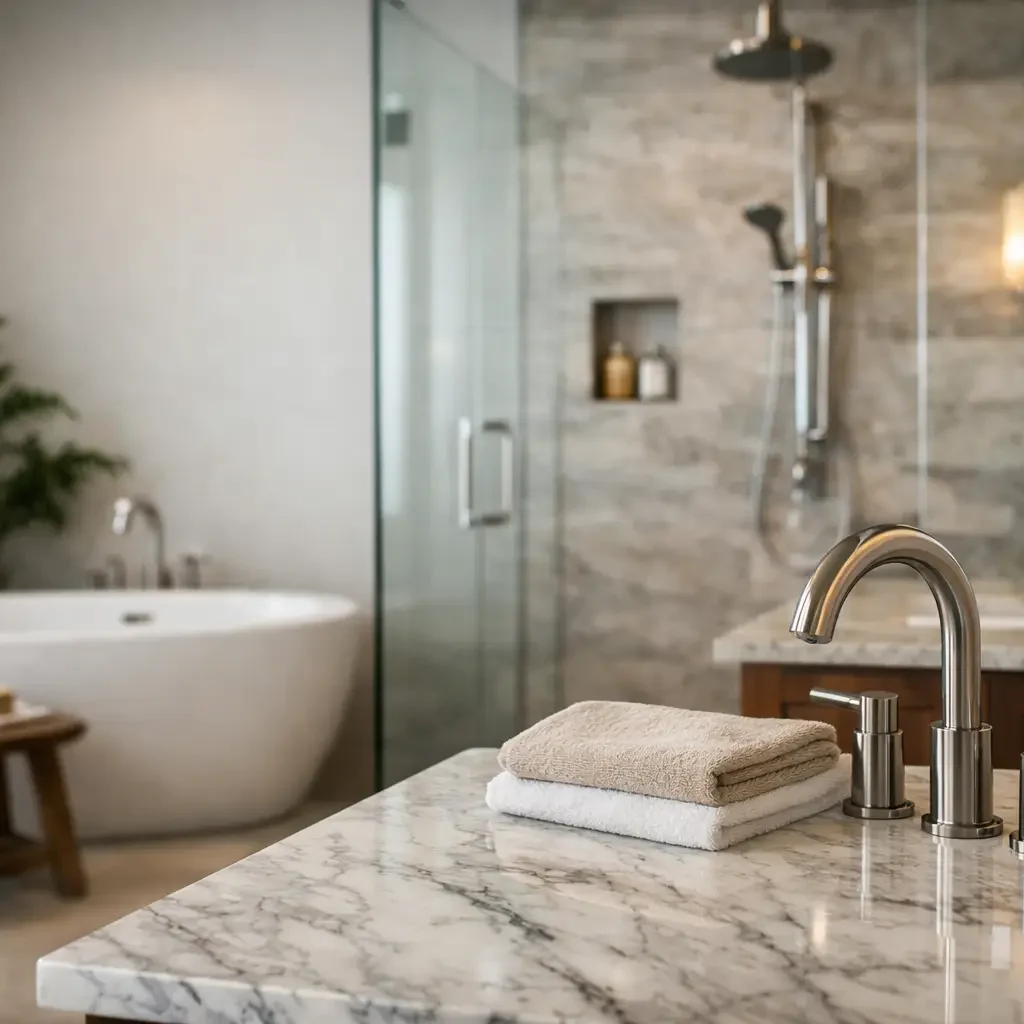
A bathroom can look complete on handover day and still become a source of expense within a few years. Grout stains, swollen vanity panels, peeling paint, and corroded fixtures usually trace back to one decision: materials were selected for appearance alone. The best bathroom remodel materials balance design intent with moisture resistance, maintenance demands, installation requirements, and the realities of the household using the space.
For a primary suite, guest bathroom, rental property, or commercial restroom, the right specification is rarely the most expensive option in every category. It is the combination that performs reliably over time, suits the project budget, and can be installed correctly within the broader renovation schedule.
Start With Performance, Not the Showroom Display
Bathrooms are demanding environments. They experience frequent water exposure, humidity, cleaning chemicals, temperature changes, and daily wear in a relatively compact footprint. A material that performs well in a dry living area may not be appropriate near a shower, tub, or vanity.
Before selecting finishes, establish how the room will be used. A lightly used powder room allows more decorative freedom than a family bathroom shared by children. A luxury primary bathroom may justify natural stone and custom millwork, but those choices require realistic expectations about sealing, cleaning, and long-term care. In an investment property, durable, readily replaceable materials can be the stronger financial decision.
The most effective material plans consider four factors together: water resistance, durability, maintenance, and visual continuity. This keeps one attractive finish from creating an avoidable weak point in the overall assembly.
Best Bathroom Remodel Materials for Floors and Walls
Porcelain tile for high-performance floors
Porcelain tile is one of the most dependable flooring choices for a bathroom. It has low water absorption, resists scratches and stains, and is available in finishes that replicate stone, concrete, wood, and fabric. Large-format porcelain can create a clean, contemporary appearance with fewer grout joints, while smaller formats provide more grout lines and potentially better slip resistance in wet areas.
The finish matters as much as the tile body. Highly polished tile can be visually striking but may be less practical on a floor exposed to water. Matte, textured, or honed-look porcelain usually provides a more secure surface. For shower floors, smaller mosaic tile is often preferred because the additional grout joints improve traction and allow the floor to slope effectively toward the drain.
Natural stone delivers character that manufactured materials cannot fully reproduce. Marble, limestone, and travertine can be excellent choices in the right project, particularly when a refined, natural finish is central to the design. They are not maintenance-free, however. Stone typically requires sealing, can etch or stain, and varies from piece to piece. It should be specified with a clear maintenance plan rather than treated as a simple substitute for porcelain.
Tile and solid surfaces for shower walls
Porcelain or ceramic wall tile remains a proven shower-wall material when installed over a properly waterproofed substrate. Ceramic tile is generally suitable for walls and often offers a cost advantage, while porcelain provides greater density and can be used across walls and floors for a coordinated look.
Large-format tile reduces grout lines and creates a more expansive visual effect, especially in smaller bathrooms. It also demands a flat wall surface, careful layout, and experienced installation. A poorly prepared substrate can lead to uneven joints, lippage, or alignment problems that no premium tile can hide.
Solid-surface shower panels are another practical option. Their minimal joints make cleaning easier, and they can create a crisp, monolithic appearance. They may be especially appropriate where low maintenance and schedule efficiency are priorities. The trade-off is less variation and artisanal detail than tile or stone provides.
Countertops That Handle Daily Use
Quartz is often the strongest all-around vanity countertop material. Its nonporous surface resists common bathroom stains, requires no regular sealing, and is available in a wide range of colors and patterns. It works particularly well for clients seeking a polished finish with predictable maintenance.
Natural stone countertops offer depth and individuality, but they require more attention. Marble is beautiful and widely associated with high-end bathrooms, yet it is susceptible to etching from toiletries and cleaning products. Granite and quartzite can offer stronger durability, though each slab should be reviewed carefully because appearance and porosity vary.
Porcelain slabs are increasingly valuable for bathroom vanities, wall cladding, and integrated design schemes. They are highly resistant to moisture and heat, and their thin profile can support a refined contemporary aesthetic. Fabrication and installation require specialized expertise, so this choice should be coordinated early with the fabricator, cabinetry design, sink selection, and edge details.
Cabinetry Requires More Than a Beautiful Door Style
Vanity cabinetry is frequently exposed to splashes, steam, and plumbing-related risks. Solid wood can be suitable in a well-ventilated bathroom, but it expands and contracts with humidity. Quality plywood construction with a durable veneer or painted finish often provides dependable stability, especially when properly sealed at exposed edges.
Avoid treating standard particleboard cabinetry as a long-term solution in high-moisture locations. Once water penetrates the surface or edges, swelling and deterioration can be difficult to reverse. This is particularly relevant around sink bases, where a small leak can remain unnoticed until substantial damage has occurred.
For a more resilient option, consider moisture-resistant engineered panels, marine-grade plywood where appropriate, or metal vanity structures paired with durable drawer components. Details matter: elevated cabinet feet or a recessed toe kick can reduce contact with standing water, and high-quality hardware helps drawers and doors maintain alignment through years of use.
Fixtures, Metals, and the Materials Behind the Finish
Faucets, shower systems, drains, and hardware should be selected as working components, not decorative accessories. Solid brass faucet bodies are generally a strong choice for longevity. Finish durability varies by manufacturer and process, so a premium-looking finish should be evaluated for its warranty, cleaning requirements, and compatibility with the project’s expected use.
Chrome remains a practical, enduring option because it is widely available, easy to coordinate, and relatively forgiving in active bathrooms. Brushed nickel and brushed brass can provide warmth while showing fewer water spots than polished finishes. Matte black offers a strong visual statement, but quality is especially important because lower-grade coatings may show wear more quickly at frequently touched areas.
Equally important are the materials that remain mostly unseen. A bathroom remodel should include appropriate waterproofing membranes, cement board or other approved tile backers, compatible adhesives, high-quality grout, and properly sealed penetrations around plumbing fixtures. These components protect the structure and determine whether the visible finishes remain intact.
Ventilation is part of the material strategy as well. Even excellent tile and cabinetry can fail prematurely if humid air is not removed effectively. A correctly sized exhaust fan, ducted to the exterior where required, helps protect paint, millwork, mirrors, and ceiling finishes from persistent moisture.
Coordinate Materials Before Construction Begins
Material decisions affect more than appearance. Tile dimensions influence layout and waste allowances. A thick stone countertop changes sink and faucet clearances. Wall-mounted faucets require plumbing coordination before finishes are installed. Custom cabinetry, specialty glass, and fabricated slabs can carry longer lead times that affect the entire construction schedule.
This is where integrated planning provides measurable value. Architecture, interior design, procurement, construction, and project management should work from one coordinated set of selections and specifications. Confirming product availability, lead times, installation methods, transition details, and maintenance expectations before construction reduces change orders and helps protect the planned budget.
At KSB, this coordination is approached as part of the project’s overall execution, not as a separate finishing exercise. The goal is to ensure each visible selection is supported by the correct technical preparation, sequence of work, and quality control through final handover.
The strongest bathroom is not defined by one dramatic slab or designer fixture. It is built through well-matched materials, disciplined installation, and decisions that continue to make sense after years of real use. Select finishes that support the way the space will be lived in, then give them the planning and craftsmanship needed to perform accordingly.