
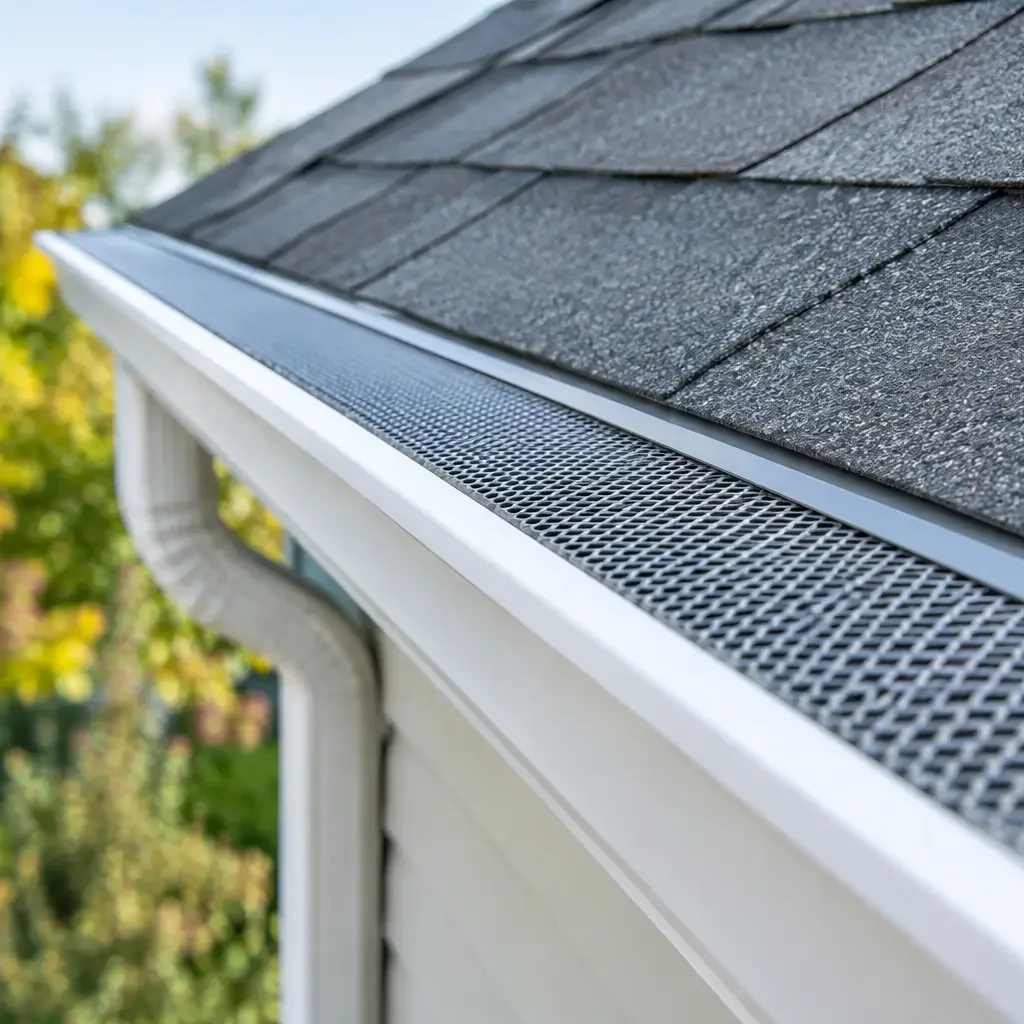
A gutter system only works when water can reach the downspouts without carrying a season’s worth of leaves, grit, seed pods, and roof debris along with it. Gutter guards can reduce that burden, but they are not a universal fix or a substitute for sound roof drainage design. For property owners planning a renovation, exterior upgrade, or long-term maintenance strategy, the right question is not simply whether to install them. It is whether a specific guard system suits the roof, tree coverage, climate, and existing gutter condition.
What Gutter Guards Are Designed to Do
Gutter guards are covers, screens, or inserts fitted over or inside gutters to limit the debris that enters the trough while allowing rainwater to pass through. Their purpose is straightforward: reduce blockages, make cleaning less frequent, and help preserve consistent water flow away from the building.
That flow matters more than many owners realize. When gutters clog, water can spill over the edge or back up beneath roof materials. Over time, this may contribute to fascia deterioration, stained siding, landscape erosion, foundation moisture issues, and ice formation in cold climates. On commercial properties, poorly managed roof runoff can also affect entryways, pedestrian areas, and the appearance of the building.
A guard does not eliminate maintenance. Fine particles can still settle in gutters, organic material can collect on top of the guard, and downspouts can clog independently. The value is in reducing the volume of material that reaches the gutter interior and making routine service more manageable.
Choosing Gutter Guards Starts With the Roof
The most appropriate system depends on how the building sheds water. A steep roof, for example, can send rainwater quickly toward the gutter. If the guard is too flat, too restrictive, or poorly installed, water may overshoot the gutter during heavy rain. A low-slope roof creates different drainage considerations, especially where runoff is slower or debris accumulates near roof edges.
Roofing material matters as well. Asphalt shingles, metal roofing, tile, and wood shake roofs have different profiles at the eave. Some gutter guard systems require fastening beneath the first course of roofing material, while others attach to the gutter lip or fascia. Any installation method should respect the roofing manufacturer’s requirements and avoid compromising the roof assembly.
Existing gutter capacity is equally important. Guards cannot correct undersized gutters, inadequate downspouts, improper pitch, loose hangers, or failing fascia boards. Installing a premium cover over a drainage system with underlying defects often postpones, rather than solves, the problem. A proper assessment should begin with the condition and sizing of the complete runoff system.
The surrounding landscape changes the decision
A house beneath mature oaks faces a different debris load than a property surrounded by pine trees. Large leaves, pine needles, helicopter seeds, blossoms, roof granules, and windblown dust behave differently on a guard surface. A product that performs well against broad leaves may be less effective where fine needles or heavy shingle grit are the main concern.
Tree coverage also affects the maintenance plan. Properties with dense canopy may still need seasonal roof and gutter service, even with guards installed. In these situations, guards can be worthwhile when they reduce the frequency and difficulty of cleaning, but expectations should remain realistic.
Common Types of Gutter Guards
Not all gutter guards manage water and debris the same way. The main categories differ in cost, appearance, durability, and maintenance requirements.
Mesh guards use a fine metal or synthetic screen to filter debris while allowing water into the gutter. High-quality stainless steel micro-mesh systems are often effective for smaller debris, although their performance depends on the mesh size, frame rigidity, roof pitch, and installation detail. They may require periodic brushing or rinsing where fine organic debris collects on top.
Reverse-curve or surface-tension covers guide water around a curved edge and into the gutter, while debris is intended to fall away. These systems can be durable and visually clean, but installation precision is essential. Their performance may vary in intense rainfall or on roofs that discharge water at high velocity.
Perforated aluminum covers provide a solid-looking surface with openings for water. They are typically more substantial than basic screens and can resist larger leaves, though very fine debris may still enter or rest on the cover. Foam inserts and brush-style inserts sit inside the gutter rather than over it. They are generally less expensive upfront, but because debris can lodge within or on them, they often need more frequent inspection and replacement.
The right choice is rarely the product with the most aggressive marketing claim. It is the system that can be properly integrated with the roof edge, gutter profile, and local conditions.
Installation Quality Has a Direct Effect on Performance
Even a well-designed guard can fail when the gutter line is poorly pitched, the fasteners are inadequate, or the transition at the roof edge is neglected. Water should flow toward the downspouts without standing in the gutter, and the gutter should be securely supported to manage the added weight of water, debris, and winter ice.
Before installation, contractors should inspect the fascia, soffit, roof edge, gutter seams, end caps, and downspout connections. Damaged wood, corroded gutters, or leaking joints should be addressed first. This approach avoids covering a problem that remains active behind the new system.
For renovation and construction projects, gutter guards are best considered as part of the exterior envelope rather than as an isolated add-on. Roofing, flashing, siding, drainage, and grading all influence how water moves around the property. Coordinating these scopes early can prevent conflicts between trades and produce a cleaner final result.
Cost Should Be Evaluated Beyond the Initial Installation
The price of gutter guards varies widely based on material, access, roof complexity, linear footage, and the condition of the existing gutters. A straightforward single-story installation is fundamentally different from work on a multi-level home with steep rooflines, dormers, or limited access.
The lowest-cost option is not always the most economical over time. A guard that needs frequent replacement or allows recurring clogs may create ongoing service costs. Conversely, a higher-quality system may not justify its price on a property with little tree coverage and easily accessible gutters. The best value comes from matching the level of protection to the actual maintenance risk.
Owners should also consider safety. If gutter cleaning requires ladders, difficult roof access, or specialized equipment, reducing service frequency has value beyond convenience. This is particularly relevant for second-story homes, large residences, investment properties, and commercial facilities where maintenance coordination can disrupt operations.
What Gutter Guards Will Not Solve
Gutter guards should not be expected to resolve basement water intrusion, roof leaks, or drainage problems caused by site grading. Those conditions require diagnosis at the appropriate source. Water entering a basement may be related to foundation waterproofing, downspout discharge location, soil slope, drainage tile, or cracks in the building enclosure.
They also do not remove the need to keep downspouts clear and direct water safely away from the foundation. Extensions, underground drainage connections, splash blocks, and grading should be reviewed as part of a complete water-management plan. A clear gutter that releases water too close to the building can still create costly moisture issues.
A More Reliable Way to Make the Decision
For property owners investing in a renovation or protecting a high-value asset, a site-specific assessment is more useful than a one-size-fits-all recommendation. Review the roof geometry, existing gutter capacity, tree coverage, drainage path, access requirements, and the condition of adjacent exterior elements. Then select a system based on documented needs rather than promises of maintenance-free performance.
At KSB, this is the same coordinated thinking applied across construction and renovation work: address the full condition of the property, align the technical details, and make decisions with long-term performance in view. When gutter guards are selected and installed as part of a broader drainage strategy, they can be a practical investment in protecting the building and simplifying its care.
A well-managed exterior is often defined by the issues no one has to notice – water flowing where it should, finishes staying protected, and maintenance remaining predictable year after year.