
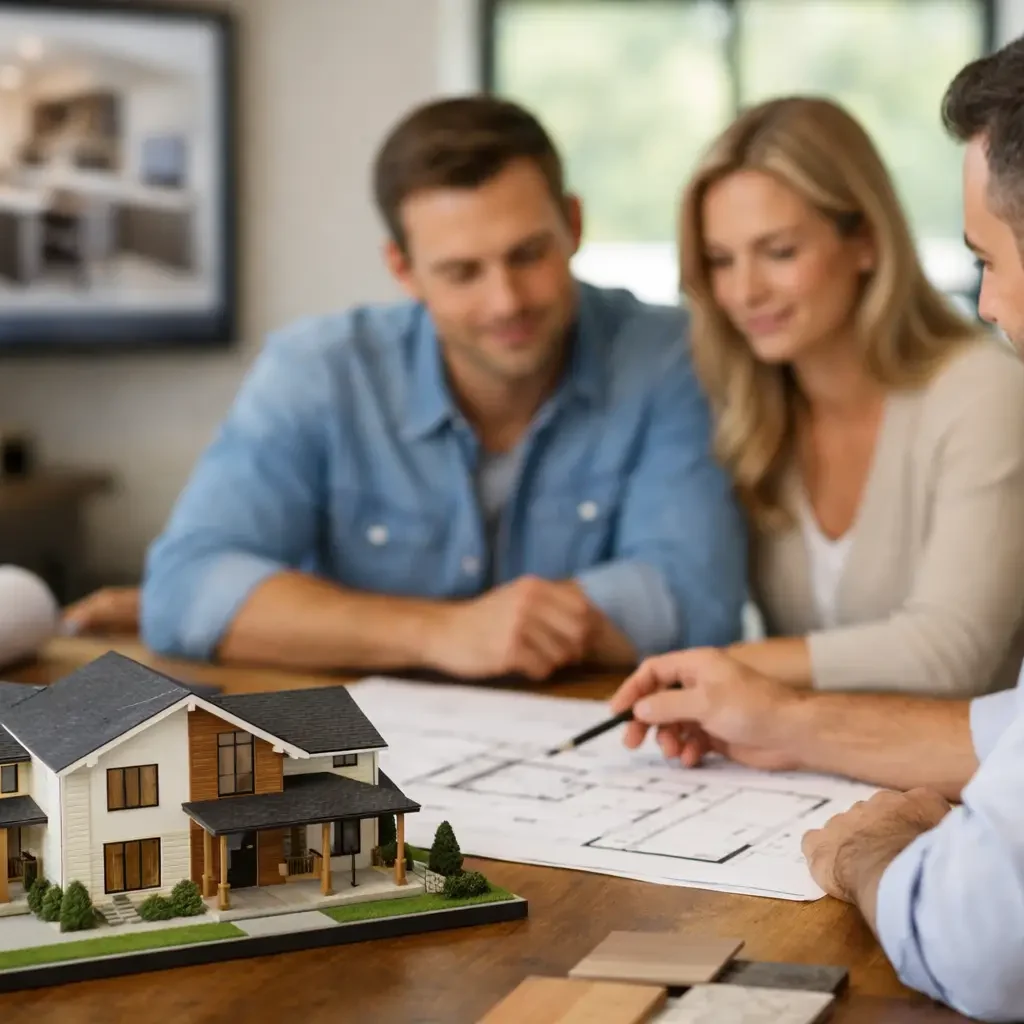
When a home project starts with one team designing it and another team pricing, revising, and building it, small disconnects can turn into expensive delays. That is why many owners now look for a custom home builder with design services – not simply for convenience, but for better control over decisions, costs, and outcomes from the beginning.
For clients building a primary residence, a second home, or an investment property, the value of an integrated model is practical. It creates a clearer path from concept to construction, reduces the risk of misalignment between drawings and execution, and gives the client one accountable partner instead of several disconnected consultants. In high-value residential projects, that level of coordination is often the difference between a well-managed build and a difficult one.
Why a custom home builder with design services changes the process
The traditional approach separates architecture, interiors, engineering coordination, and construction into different stages managed by different parties. In some cases, that works well. If a client already has a long-standing architect and a trusted project manager, a divided structure may be appropriate.
But many homeowners and investors are not looking to assemble and supervise a team on their own. They want a process that is organized, transparent, and guided by professionals who understand both design intent and construction realities. A custom home builder with design services brings those responsibilities together early, which improves decision-making at the point where decisions matter most.
This affects more than workflow. It directly influences feasibility. Design ideas are reviewed through the lens of buildability, schedule impact, material availability, permitting requirements, and budget discipline. Instead of redesigning major elements after pricing comes back too high or site conditions become clearer, the project is shaped with those constraints already in view.
What integrated design-build support actually includes
Not every firm offering design support provides the same depth of service. For that reason, clients should look closely at scope and responsibility, not just marketing language.
In a strong integrated model, the process typically starts with project definition. That includes understanding the property, the client’s goals, lifestyle needs, functional priorities, aesthetic direction, and investment expectations. From there, the design phase develops with construction input already built into the conversation.
Architectural planning and technical coordination
At the architectural level, the value is not only in creating a custom layout. It is also in aligning the plan with the realities of the site, local regulations, structural logic, and the intended construction method. A design that looks appealing on paper but creates inefficiencies in framing, mechanical systems, or approvals can produce unnecessary cost later.
Integrated coordination helps prevent that. It allows the builder, design team, consultants, and client to evaluate trade-offs before they become change orders.
Interior design and finish decisions
Interior design is often treated as a later layer, but in custom residential work it should be part of the planning framework much earlier. Cabinet layouts affect electrical placement. Flooring selections can influence transitions and floor heights. Lighting plans, built-ins, and plumbing fixtures all have downstream effects on procurement, installation sequencing, and cost.
When interior design is connected to the build team, those selections are made with full visibility into timing and execution. That creates a more disciplined process and reduces the risk of late-stage revisions.
Budget alignment from the start
One of the biggest advantages of an integrated approach is budget visibility. A client should not have to wait until after a full design package is completed to learn whether the project is financially realistic.
A qualified custom home builder with design services can provide budget guidance during concept development, not only after the fact. That does not mean every number is fixed early. It means the project evolves with cost awareness, so the client can make informed choices as scope develops.
The operational benefits clients notice most
For residential owners and private investors, the most immediate benefit is simpler communication. Instead of relaying decisions between separate firms, the client works with one coordinated team. Questions are easier to resolve, responsibilities are clearer, and the project is less dependent on the client to manage technical gaps.
There is also a stronger chain of accountability. When design and execution are split, each side can point to the other when issues arise. When both are under one structure, the expectation is clearer: the same partner is responsible for planning thoroughly, coordinating properly, and delivering as promised.
Schedule performance can improve as well. That does not mean integrated projects are automatically faster in every case. Complex homes still require approvals, careful detailing, procurement planning, and disciplined site management. But the handoff between design and construction tends to be more efficient when the team has been aligned from the beginning.
Quality control is another major factor. The details discussed during design are easier to protect during construction when the builder has direct visibility into the design intent and the designers understand how decisions will be executed in the field.
When this model is the right fit – and when it may not be
An integrated model is especially well suited to clients who value time, oversight, and clarity. It works well for homeowners who want a tailored residence without personally coordinating architects, engineers, interior designers, estimators, and trades. It is also a strong fit for investors and developers who need predictable management and a disciplined process.
This model can be particularly effective in projects involving renovation and expansion, where existing conditions often create surprises. Early coordination between design and construction helps identify constraints before they affect schedule or budget too severely.
That said, it is not the only valid approach. Some clients prefer to select an independent architect first, complete the design, and bid the work separately. In projects where design experimentation is the top priority and budget is more flexible, that route may suit the client better. The best structure depends on the client’s decision-making style, timeline, tolerance for complexity, and need for single-point accountability.
How to evaluate a custom home builder with design services
The right partner should demonstrate more than attractive renderings or a strong construction portfolio. Clients should ask how the firm manages preconstruction, how design decisions are documented, how budgets are updated, and who is responsible for coordination at each phase.
A reliable process usually includes clear milestones, realistic pricing conversations, detailed scope definition, and regular reporting. It should also include transparent discussion of what is still open, what may affect cost, and where client decisions are needed to keep the project moving.
Look for evidence of disciplined management. That includes control over procurement, consultant coordination, schedule tracking, change management, and site supervision. A premium residential project is not protected by design quality alone. It is protected by execution quality and by the systems behind that execution.
It is also worth assessing communication style. A well-run firm should be able to explain technical matters clearly, without unnecessary jargon or ambiguity. Clients should feel informed, not overwhelmed.
A better way to build with confidence
A home is too significant an investment to be managed through fragmented responsibilities and reactive decisions. Choosing a custom home builder with design services creates a more structured environment for planning, pricing, and execution, with fewer blind spots between concept and delivery.
For clients who want personalized results without losing control of budget, timeline, or quality, integrated delivery offers a practical advantage. It brings design vision and construction discipline into the same conversation from day one. That is where better projects usually begin.
At KSB, that integrated mindset is central to how complex residential projects are guided from early concept through final handover. For clients seeking a single, accountable partner, the goal is simple: clear communication, disciplined coordination, and a home delivered with the level of care it deserves.
The right team will not just design a house that looks right on paper. It will help you make confident decisions at every stage, so the finished home performs as well as it was imagined.